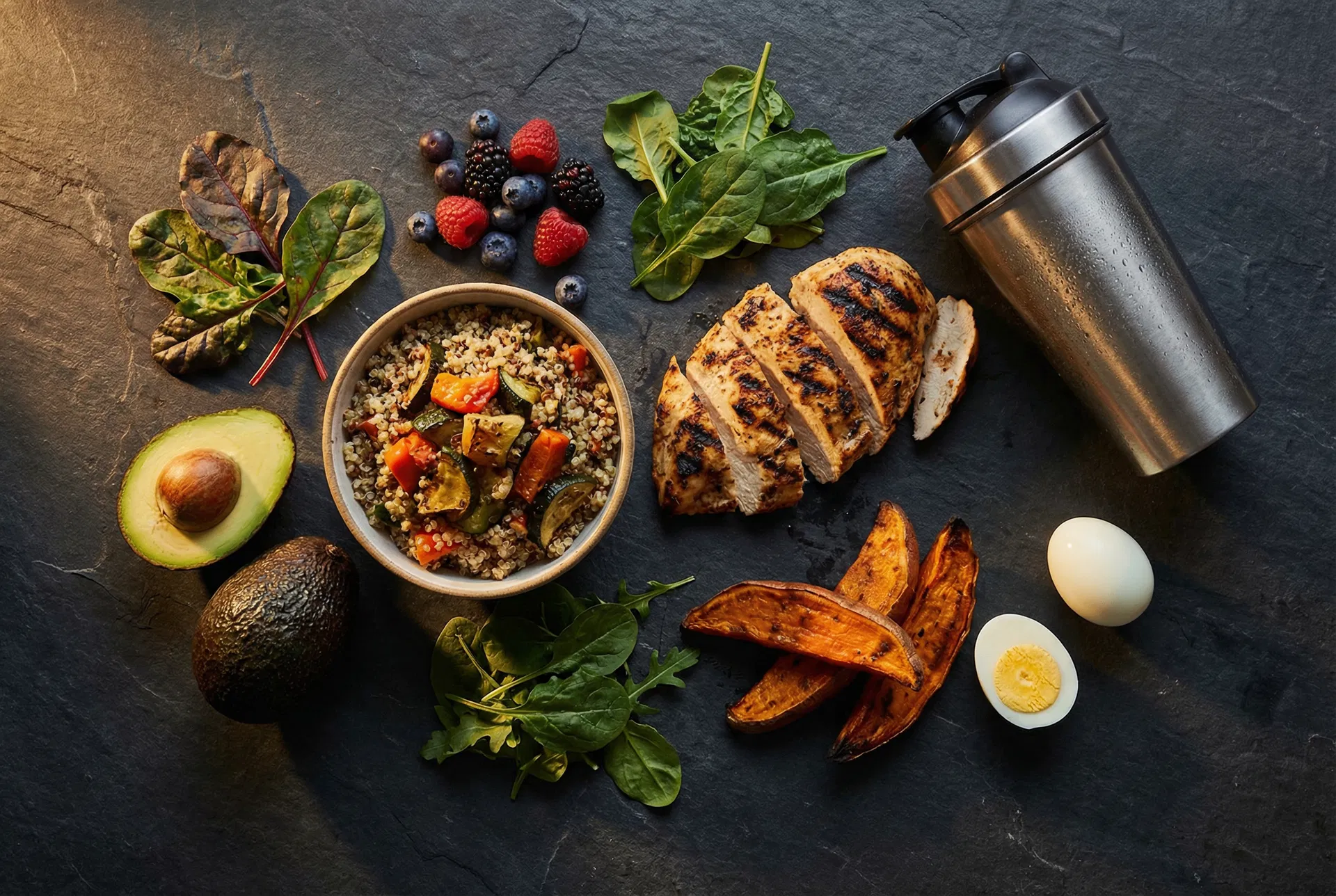
NUTRITION
FUNDAMENTALS
Fuel your body with whole, real food. Understand macronutrients, meal timing, and the science of eating for performance, recovery, and long-term health.
EAT WHOLE FOODS
The single most important nutrition principle: eat real, whole, minimally processed food. If it grew from the ground, swam in the sea, or roamed the earth — it's whole food.
What Are Whole Foods?
Whole foods are foods that have been minimally processed and are as close to their natural state as possible. They contain no added sugars, artificial ingredients, or chemical preservatives. They are nutrient-dense, meaning they deliver maximum vitamins, minerals, and fiber per calorie.
Why Whole Foods Matter
- Higher nutrient density — more vitamins and minerals per calorie
- Better digestion — natural fiber keeps your gut healthy
- Stable energy — no blood sugar spikes and crashes
- Disease prevention — reduces risk of heart disease, diabetes, and cancer
- Better performance — real food fuels real results
The Minimal Ingredients Rule
When you must buy packaged food, follow this golden rule: the fewer the ingredients, the better. If a product has more than 5 ingredients, or contains anything you can't pronounce, put it back on the shelf.
STAY AWAY FROM PROCESSED SUGAR
Processed sugar is one of the most damaging substances in the modern diet. It provides zero nutritional value while wreaking havoc on your body, performance, and long-term health.
The Dangers of Processed Sugar
Hidden Sugar Sources to Avoid
Satisfy Cravings Naturally
THE MACRONUTRIENTS
Protein
The building block of muscle. Essential for repair, recovery, and growth. Aim for 1.6-2.2g per kg of body weight daily.
Benefits
Carbohydrates
Your body's primary energy source. Choose complex carbs for sustained energy and fiber.
Benefits
Fats
Essential for hormone production, brain function, and nutrient absorption. Choose healthy fats.
Benefits
THE HEALTHY PLATE
Vegetables
Half your plate — colorful variety
Whole Grains
Quarter of your plate — complex carbs
Protein
Quarter of your plate — lean sources
MEAL TIMING
Pre-Workout
1-3hEat 1-2 hours before training. Complex carbs + moderate protein. Example: oatmeal with banana and protein powder.
Post-Workout
30-60 minEat within 30-60 minutes after training. Fast-digesting protein + carbs. Example: chicken breast with rice and vegetables.
Daily Meals
View AllEat 3-5 balanced meals throughout the day. Don't skip breakfast. Keep meals consistent in timing.
DRINK LOTS OF WATER DRINK LOTS OF WATER
Water is the most underrated performance enhancer. Your muscles are 75% water, your brain is 73% water, and even mild dehydration (2%) can reduce physical performance by up to 25%.
Drink 500ml (16oz) first thing in the morning
Carry a water bottle everywhere
If your urine is dark, you're not drinking enough
Subscription Required
Nutrition Guide
Subscribe to Evore Hub to unlock full access to all content — exercises, nutrition, recovery, lifestyle, and more.
Base: $9.99/month or $79.99/year. Cancel anytime.